
The Cueva del Viento in Tenerife
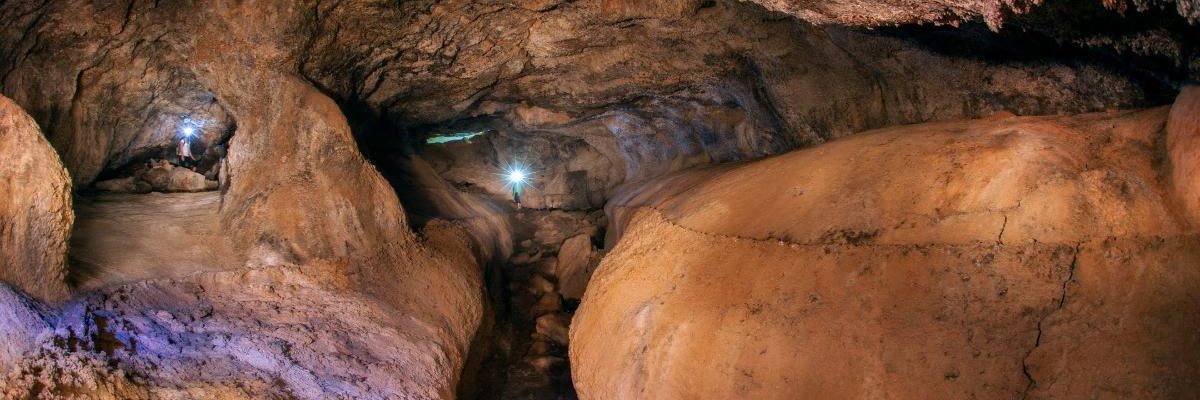
The Cave of the Wind
The Cueva del Viento is one of the most surprising natural treasures of Tenerife and an essential destination for those looking to discover the most enigmatic side of the island. Located in the municipality of Icod de los Vinos, in the north of Tenerife, it is the longest volcanic tube in Europe and the sixth longest in the world, with more than 17 kilometres of explored galleries.
Its name comes from the air currents that circulate inside it due to the differences in temperature and pressure between different parts of the system. This phenomenon creates a unique atmosphere that captivates tourists and scientists alike.
The Cueva del Viento isn’t just a place for adventurers; It is also a time capsule that preserves geological formations and fossil remains of great value. Exploring it means entering an underground world where darkness, silence and geological history combine to offer an unforgettable experience.
Visiting this place is an opportunity to learn more about the volcanic origin of Tenerife and appreciate how nature, over thousands of years, has created authentic wonders under our feet. In this article, we will explore its formation, biodiversity, tourist route and everything you need to know to live the experience of visiting the Cueva del Viento.
Index
Origin and Geological Formation
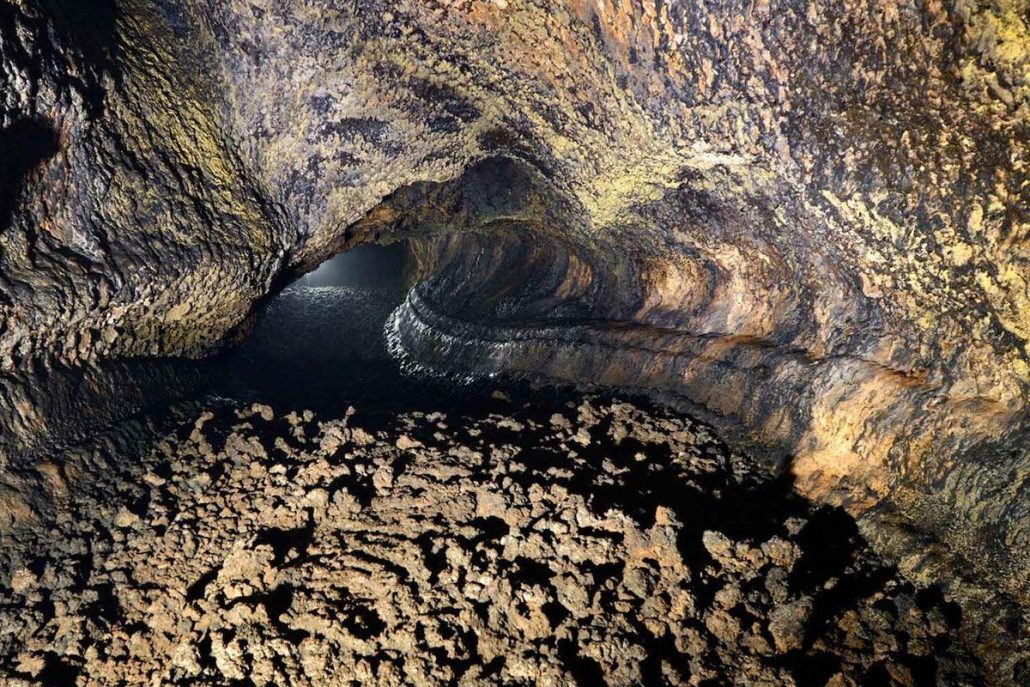
The Cueva del Viento was formed approximately 27,000 years ago, after the eruption of the Pico Viejo volcano, located next to the majestic Teide. During that eruption, rivers of lava flowed down the northern slope of the island, and the surface layer cooled rapidly, solidifying. However, the lava circulating underneath continued to flow, creating galleries and tunnels of great length.
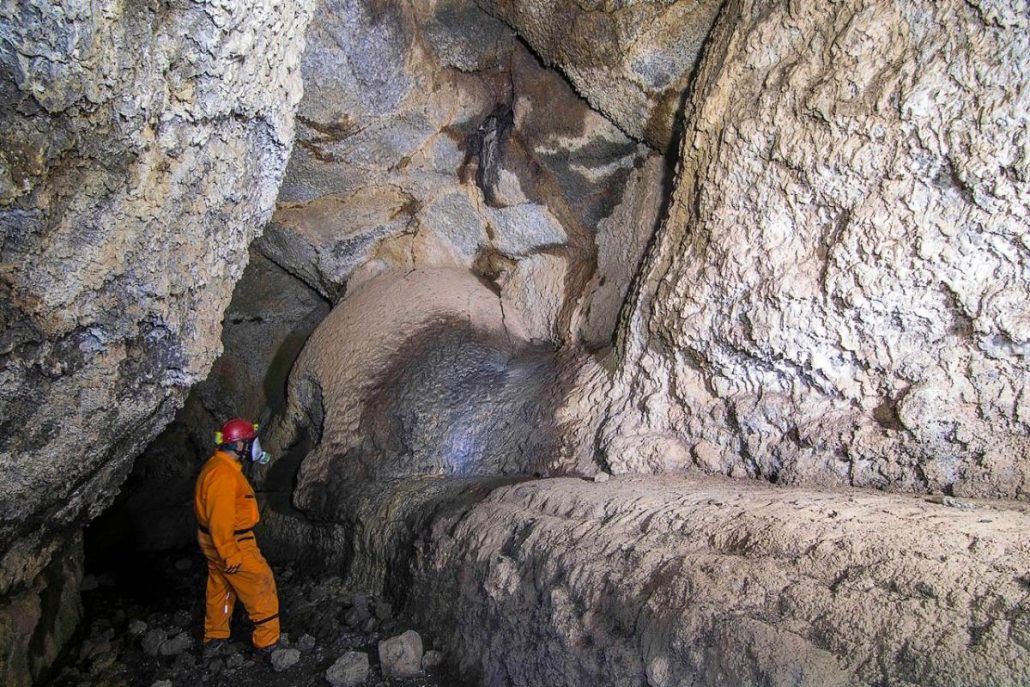
This phenomenon, known as a “volcanic tube,” gave rise to an intricate system of passageways at several levels, some of which have yet to be fully explored. The Cueva del Viento is estimated to have at least three overlapping levels, with unique formations such as lava stalactites, terraces, and blocks detached by ancient landslides.
Its geological value is incalculable, as it offers a direct insight into the volcanic processes that shaped Tenerife. In addition, it connects with other smaller cavities, forming an underground complex that still holds secrets.
The exploration of the Cueva del Viento has made it possible to document phenomena such as “volcanic sand dunes” and mineral deposits formed by filtrations, which adds a scientific component of great interest. This natural structure is not only a testament to the power of volcanoes, but also a living laboratory for better understanding the geological evolution of the Canary Islands.
A unique underground ecosystem
Although at first glance it may seem an inhospitable place, the Cueva del Viento is home to a very particular ecosystem. More than 90 species of invertebrates have been identified inside, many of them endemic and adapted to life without light. These organisms, known as troglobians, have evolved surprising adaptations, such as the absence of pigmentation and highly developed sensory organs to orient themselves in the dark.
In addition to the living fauna, the cave holds fossil remains of great paleontological importance. Bones of extinct species have been found, such as giant lizards and large rats that inhabited Tenerife thousands of years ago. These findings have allowed researchers to reconstruct some of the island’s natural history.
The constant humidity, air currents and stable temperature create an ideal microclimate for the preservation of these remains and for the survival of fauna adapted to the environment. For this reason, the Cueva del Viento is subject to strict protection measures, limiting access to avoid alterations to its fragile ecosystem.
Exploring this cave is not only a geological journey, but also a biological one. Each visit becomes an opportunity to understand life’s incredible ability to adapt to even the most extreme environments on Earth.
Cueva del Viento Sightseeing Tour
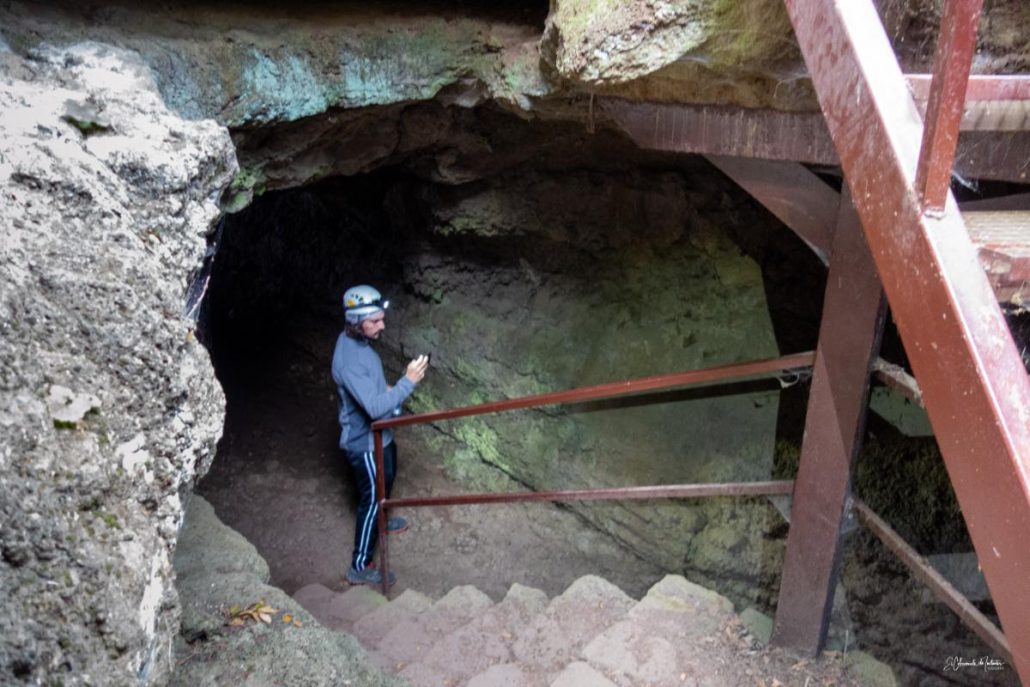
Visiting the Cueva del Viento is an organized and guided experience to ensure the safety of visitors and the preservation of the environment. The tour begins at the Visitor Centre, located in Icod de los Vinos, where an introduction to the history, geology and biodiversity of the cave is offered.
From there, a shuttle takes visitors to the start of a trail that winds through beautiful rural scenery and scrubland areas. After a walk of about 20 minutes, you reach the entrance of the cave.
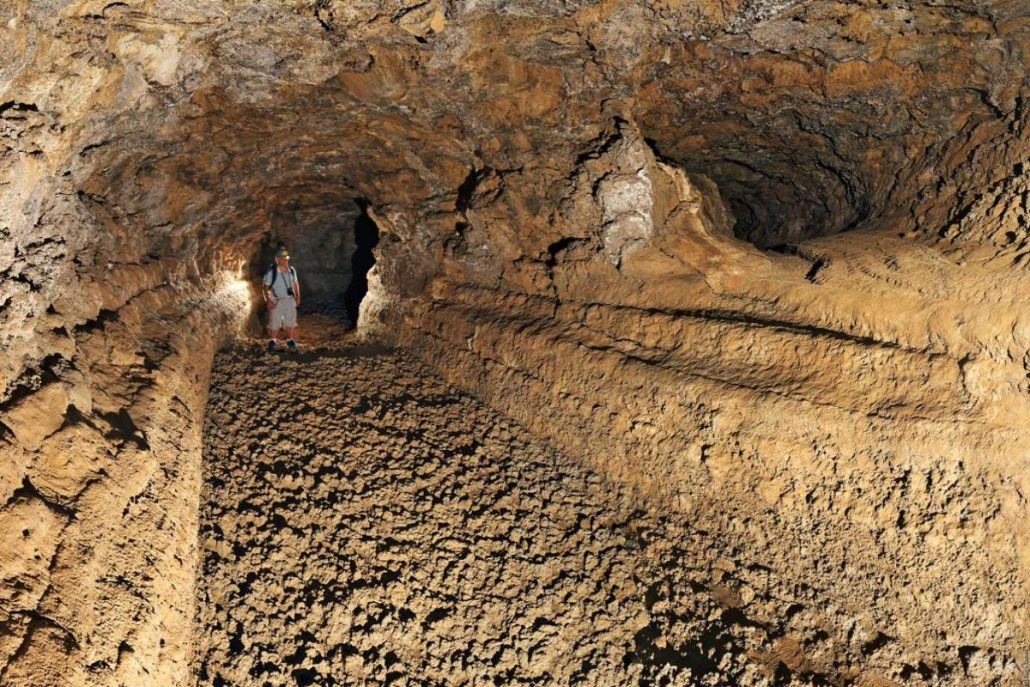
Inside, the enabled itinerary runs through about 200 meters of accessible galleries, although the total system is much more extensive. Along the way, the guides explain the most interesting formations, such as lava stalactites, walls with cooling patterns and soils covered with volcanic sand.
The tour is done in small groups and always with special lighting, since there is no artificial light inside. This allows you to experience total darkness and feel the absolute silence of the underground world.
This visit is not only a tourist activity, but also an educational one. You’ll leave with a new perspective on the strength of the volcanoes and the hidden beauty of Tenerife.
Rules and Recommendations for the Visit
To protect the Cueva del Viento and ensure everyone’s safety, it is essential to follow certain rules. Touching walls or formations is not allowed, as even the slightest contact can damage them. Food cannot be taken or waste left either.
It is advisable to wear comfortable, closed-toe shoes, as the terrain inside is uneven and can be slippery. The temperature inside the cave is stable, around 17 ºC, so it is advisable to wear a light jacket.
The minimum age to participate in the tour is usually five years old, and it is not recommended for people with severe mobility problems, due to the nature of the terrain. In addition, reservations must be made in advance, as the number of daily places is limited.
The guides’ explanations are in several languages, which facilitates the experience for international visitors. Following their instructions is not only a matter of safety, but also of respect for this valuable natural heritage.
Complying with these recommendations ensures that the Cueva del Viento is preserved in the best conditions so that future generations can enjoy it as it is today.
Natural and Cultural Environment of Icod de los Vinos
Visiting the Cueva del Viento is also a perfect opportunity to discover Icod de los Vinos and its surroundings. This charming municipality is famous for the Drago Milenario, an emblematic tree that is estimated to be more than 800 years old.
The historic centre of Icod is full of cobbled streets, traditional Canarian houses and quiet squares. In addition, the area has spectacular viewpoints towards Mount Teide and the Atlantic.
Nature lovers can take the opportunity to walk nearby trails, such as those that go into Monte de La Esperanza or those that border the coast. It is also worth trying the local gastronomy, with typical dishes such as wrinkled potatoes with mojo and locally produced wines.
Overall, the visit to the Cueva del Viento can easily be combined with a day of cultural, gastronomic and landscape tourism, creating a complete experience that shows the diversity that Tenerife offers.
Practical Tips to Enjoy the Experience
To make the most of your visit to the Cueva del Viento, it’s best to plan ahead. The best time to go is during spring and autumn, when temperatures are mild and there is less influx of tourists.
The tour, including the visitor center and the walking route, takes approximately two hours. It is advisable to arrive early, as visits leave on time.
If you are travelling by car, you will find parking in the immediate vicinity of the visitor centre. It is also possible to get there by public transport, although with less frequent schedules.
Combining the experience with other nearby attractions, such as Garachico or the Teide National Park, can make the day an unforgettable route. Don’t forget to bring water and a camera to capture the scenery outside, as flash is not allowed inside.
With a good preparation, your visit to the Cueva del Viento will be one of the most memorable experiences of your trip to Tenerife.
Conclusion: A Journey to the Heart of the Earth
The Cueva del Viento is not only a tourist attraction, but an authentic natural and scientific jewel that deserves to be explored with respect and admiration. Entering its galleries is like traveling back in time, traveling through thousands of years of geological history in just a few meters.
Its combination of beauty, mystery and ecological value makes it a unique destination within Tenerife. In addition, its location in Icod de los Vinos allows you to complement the experience with culture, gastronomy and impressive landscapes.
To visit the Cueva del Viento is to understand a little better how the force of the volcanoes has shaped the island and to discover that, beneath the surface, there is a fascinating world full of secrets. It is an experience that leaves its mark and invites us to reflect on the importance of conserving our natural heritage.