
Traditional Canarian Architecture in Tenerife
Traditional Canarian Architecture in Tenerife
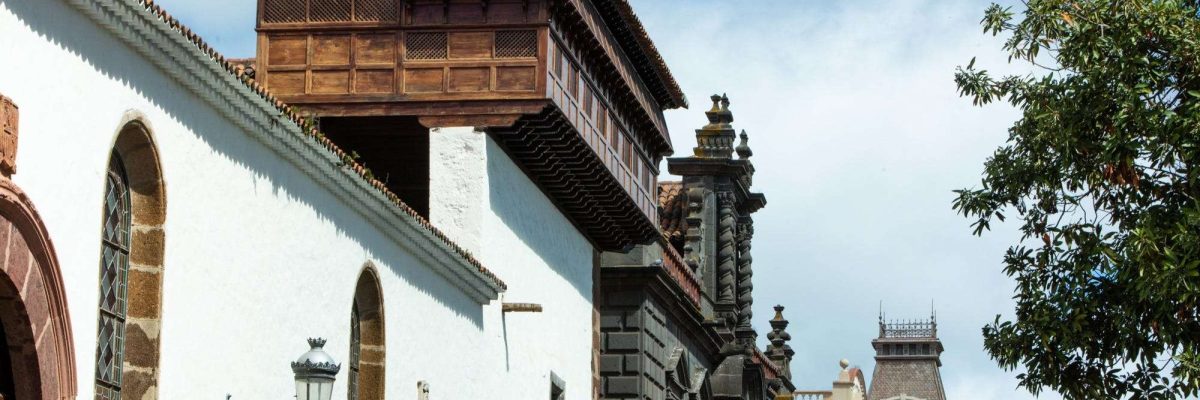
The Traditional Canarian Architecture in Tenerife is one of the most representative elements of the island’s identity. Not only does it define the aesthetics of many towns and historic centers, but it also reflects the history, climate, and culture of its inhabitants. From its colorful facades to its carved wooden balconies, this architectural style has managed to survive the passage of time, becoming a first-class tourist attraction. Any traveller who travels through Tenerife, from the villages of the north to the coasts of the south, will come across unique examples that show how this architecture has influenced the daily lives of entire generations.
The preservation of Traditional Canarian Architecture is essential to understand the urban evolution of Tenerife. These constructions are not only beautiful on the outside, but also tell stories that date back to the first European settlers, adapting to a volcanic territory and a mild but variable climate. Visitors who come to these historic centers experience a journey through time: cobbled streets, interior courtyards full of vegetation and houses that keep centuries-old elements intact.
In addition, this architectural style continues to be a source of inspiration for contemporary designs that seek to integrate tradition and modernity. Therefore, getting to know the Traditional Canarian Architecture in Tenerife is an opportunity to discover the essence of the island from a cultural, historical and aesthetic point of view.
Index
Origins and Influences of Traditional Canarian Architecture
The origins of Traditional Canarian Architecture in Tenerife date back to the time after the Castilian conquest of the fifteenth century, when new European settlers arrived on the islands and began to adapt their forms of construction to the volcanic environment and the subtropical climate. Although the Guanche dwellings were not preserved in their entirety, their arrangement in caves and their direct relationship with nature indirectly influenced the subsequent development of the island’s architectural style.
One of the key factors in the evolution of Traditional Canarian Architecture was the cultural mix. Castilian, Portuguese, Andalusian and even Flemish influences came together to create a unique style. This fusion is especially appreciated in the interior courtyards, in the balconies made with local woods and in the use of materials such as volcanic stone. To these European influences were added Mudejar elements, visible in the coffered ceilings and in some decorative details that still remain in historic buildings.
The geographical isolation of the islands favoured these characteristics to be consolidated over time, giving rise to a homogeneous style but with variations depending on the geographical area. For example, the areas of the north of Tenerife, more humid, had houses with closed balconies to protect them from the weather, while in the south, more arid, simpler facades and materials adapted to dryness predominated. All in all, the Traditional Canarian Architecture is today a reflection of the cultural miscegenation that defines the identity of Tenerife.
Most Characteristic Construction Elements and Materials
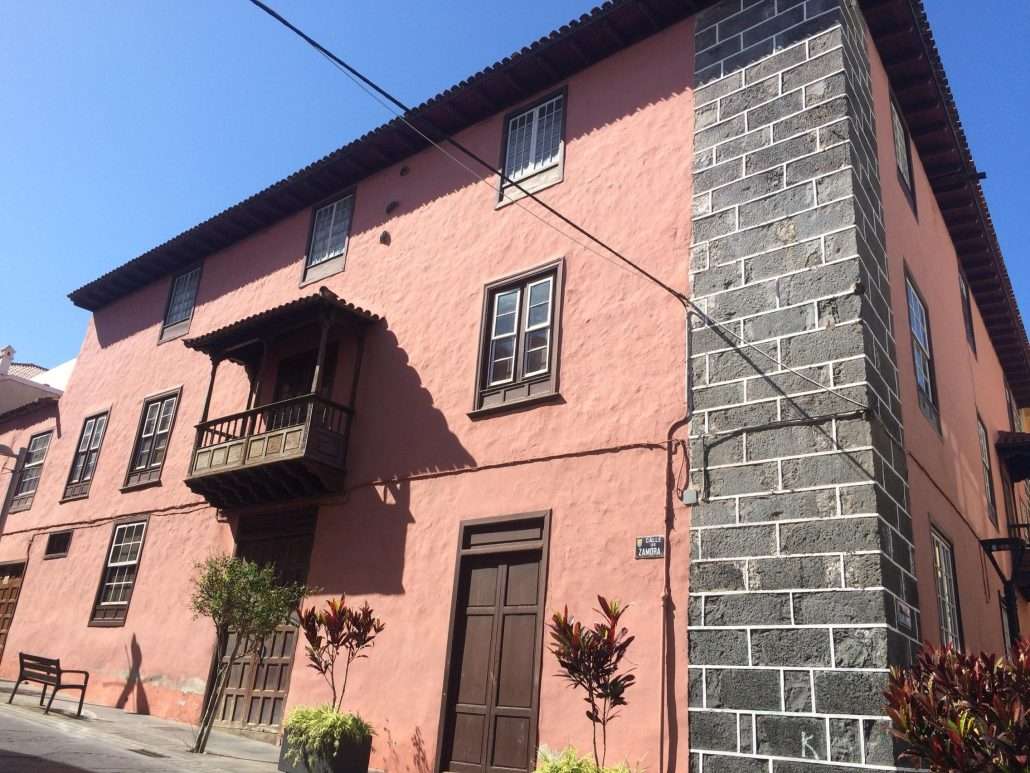
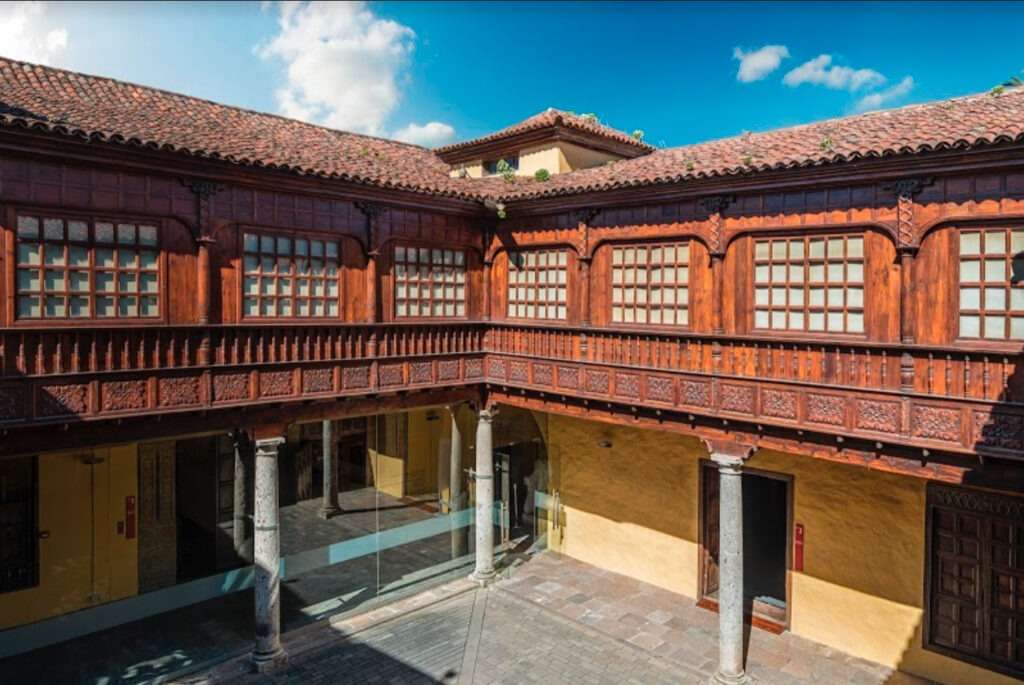
The richness of Traditional Canarian Architecture is manifested in its materials and construction elements, designed to resist the oceanic climate and take advantage of the resources of the territory. One of the most emblematic elements are the wooden balconies, generally made of tea or Canarian pine, carved with great detail and located on the upper floors of the houses. These balconies not only had an aesthetic function, but also a practical one, as they allowed the houses to be ventilated and the mild climate to be enjoyed.
The facades usually have warm colors, such as yellows, ochres or reds, which stand out in contrast to the volcanic stone used in corners, door frames and windows. The use of local stone is one of the great hallmarks of
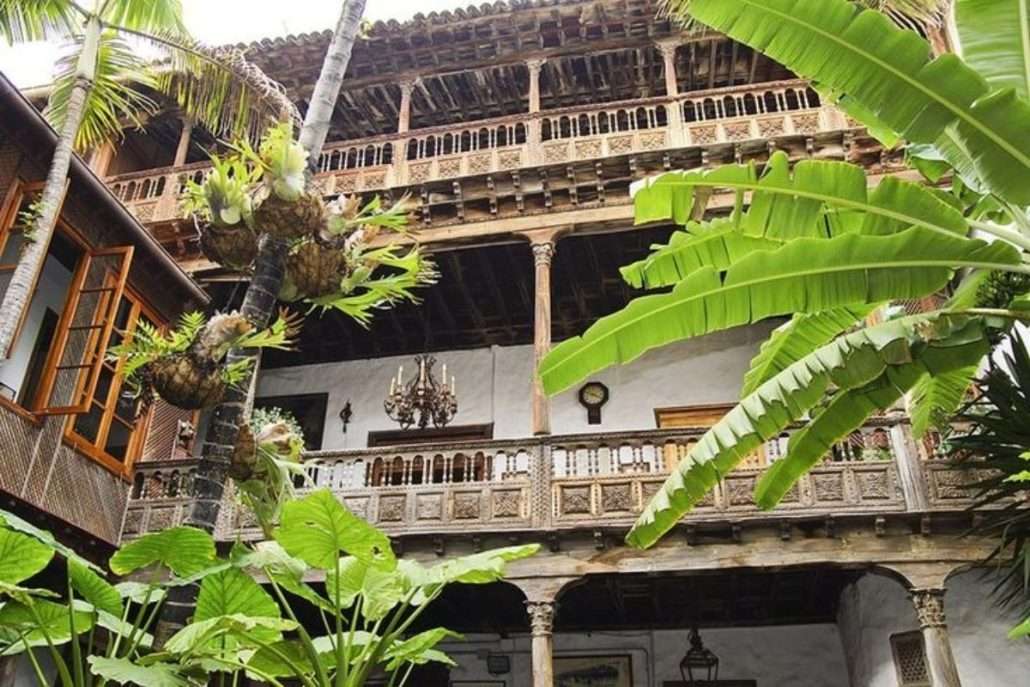
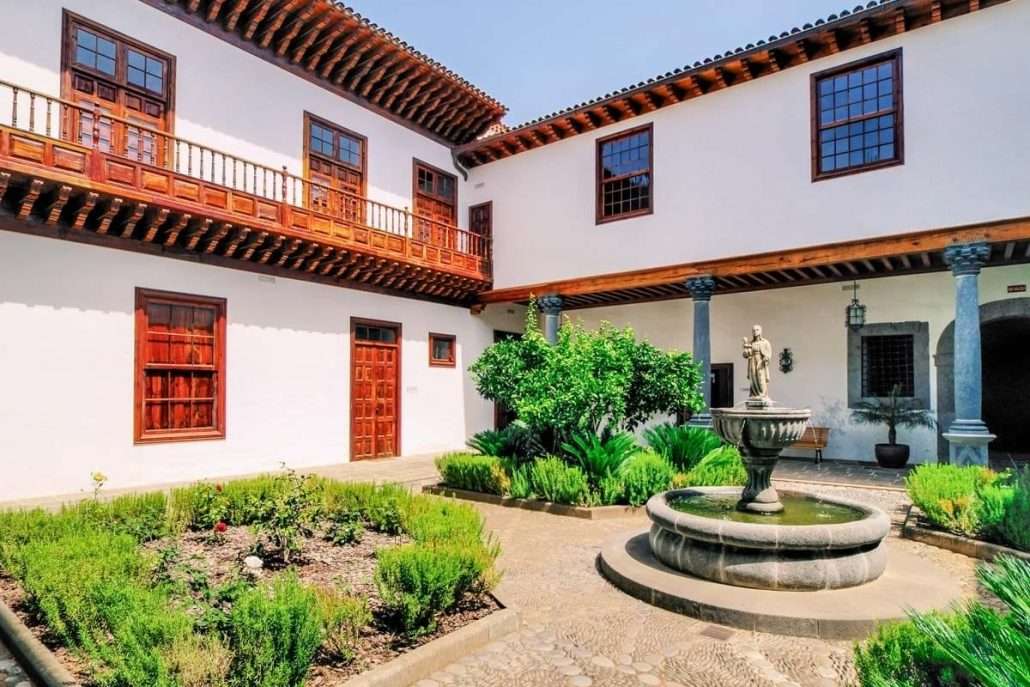
Interior courtyards are another essential element. These open areas within the house served as a social space, point of light and ventilation. In many cases, they were surrounded by wooden galleries and partially covered by vegetation, creating a cool microclimate throughout the year. Double-leaf doors, small windows with wooden shutters, and stone or terracotta floors are also common. Together, all these elements make Traditional Canarian Architecture renowned for its functional beauty and its harmony with the natural environment.
Traditional Canarian Architecture in the Historic Centres of Tenerife
The historic centres of Tenerife are authentic open-air museums where the Traditional Canarian Architecture is preserved with great fidelity. One of the most emblematic places is San Cristóbal de La Laguna, declared a World Heritage Site by UNESCO. Its rectilinear streets, stately homes, convents and interior courtyards perfectly represent the evolution of this architectural style. To stroll through La Laguna is to discover carved balconies, traditional green windows and facades that have withstood centuries of history.
La Orotava is another of the great references. Its historic centre is home to outstanding examples such as the Casa de los Balcones, probably one of the most famous constructions of Traditional Canarian Architecture in all of Tenerife. Noble houses and popular dwellings coexist forming a harmonious whole that attracts thousands of visitors every year. Its steep streets and stone floors make the walk an experience that combines history and scenic beauty.
Garachico, rebuilt after the volcanic eruption of 1706, also preserves an exceptional architectural heritage. Its churches, port houses and squares reflect the commercial spirit that characterized the town in past centuries. In municipalities such as Güímar, Tacoronte or Icod de los Vinos you can also find very well preserved examples of traditional houses, which allows you to appreciate the variety and richness of Traditional Canarian Architecture in different areas of the island.
Stately Homes Domestic Architecture in Tenerife
The difference between popular houses and stately homes is one of the most interesting aspects of Traditional Canarian Architecture. The popular houses, generally with one or two floors, were characterized by their simplicity and functionality. They used materials from the environment and had small patios, facades with simple lines and wooden windows without large ornaments. These houses represented the day-to-day life of farmers, artisans and humble families who lived adapted to the climate and the rural or urban rhythm of the island.
In contrast, the stately homes of Tenerife stand out for their elegance and decorative richness. Owned by wealthy families, many of them linked to commerce or the colonial administration, these houses usually include large interior courtyards surrounded by wooden galleries, coffered roofs of Mudejar influence and carved balconies that show the social status of their owners. The use of carved volcanic stone in doorways and windows is especially common in this type of building.
The stately homes of La Laguna, La Orotava or Garachico are outstanding examples of how Traditional Canarian Architecture reached a high degree of refinement. Many of these homes have been converted into museums, houses of culture or tourist spaces, allowing visitors to discover their interior and appreciate unique details such as the cobbled courtyards, the brightly coloured plinths and the antique wooden furniture. This variety of domestic styles reflects the social and economic diversity that has characterised Tenerife throughout its history.
Conservation, Restoration and Challenges for the Future
The conservation of Traditional Canarian Architecture in Tenerife is a complex challenge that requires the collaboration of public institutions, private owners and heritage experts. Many buildings deteriorate due to the passage of time, humidity or abandonment. However, in recent years numerous initiatives have been promoted to restore facades, patios and balconies, thus guaranteeing the preservation of this cultural legacy for future generations.
Urban planning regulations in municipalities with protected historic centres seek to maintain the aesthetic coherence of the environment. These regulations require the use of traditional materials and specific colours to ensure that the interventions respect the original style of Traditional Canarian Architecture. At the same time, current technology makes it possible to reinforce old structures without altering their external appearance, making them easier to use as homes, offices or tourist spaces.
One of the great challenges for the future is to integrate this architecture with contemporary urban development. Tenerife continues to grow as a tourist destination and as a place of residence, which generates a constant demand for new constructions. Finding a balance between modernity and tradition is essential to maintain the visual essence of the island’s towns and cities. Public awareness and heritage education also play a key role in guaranteeing the conservation of Traditional Canarian Architecture in the coming years.
Where to Discover Traditional Canarian Architecture in Tenerife Today
Those who visit Tenerife have multiple opportunities to get to know the Traditional Canarian Architecture up close, either by touring historic centers, exploring small villages or visiting museums that explain the evolution of this style. La Laguna is one of the essential destinations: its colonial urban layout, its squares and its colorful houses invite you to enjoy a quiet walk full of history. Museums such as the Casa Lercaro or the Casa de los Capitanes offer a detailed look at the daily life of past centuries.
In La Orotava, the guided tours allow you to discover emblematic houses, carved balconies and interior courtyards that show the maximum expression of Traditional Canarian Architecture. Another essential point is Garachico, where historic architecture coexists with the volcanic landscape and sea views. It is also advisable to visit lesser-known villages such as El Sauzal, Buenavista del Norte or Arico, where traditional houses are preserved in a more rural and authentic environment.
In addition, the island’s visitor centres and ethnographic museums explain the origin and evolution of this architectural style, helping visitors to understand why it has become a symbol of Canarian identity. Together, all these places allow you to explore, learn and enjoy the rich heritage offered by the Traditional Canarian Architecture in Tenerife.
Conclusion
The Traditional Canarian Architecture in Tenerife is a cultural treasure that combines history, aesthetics and functionality. Its wooden balconies, interior courtyards, colourful facades and clever use of local materials reflect centuries of adaptation to the territory and diverse cultural influences. This architectural style not only beautifies the island’s towns and cities, but also contributes to its identity and tourist appeal.
Preserving the Traditional Canarian Architecture is essential to keep Tenerife’s historical legacy alive. Thanks to conservation efforts and the growing interest of visitors and residents, this heritage continues to be an essential part of the urban and rural landscape. Exploring its historic centres, visiting its stately homes and getting to know its courtyards allows the traveller to enjoy a unique experience that combines past and present.